


Learn about three frequenters of our coast, sea urchins, sand dollars, and sea stars. Why do we say sea star and not star fish? Are sea stars and sea urchins related? Do sand dollars have brains? Find out the answer to these questions and other fun facts about these amazing creatures. 
Every Thursday at 2:00 pm in May, Museum of Coastal Carolina presents a Sea Tales Family Program, providing information understandable for all audiences, interactive discussions, and STEAM activities, all featuring creatures from our exhibits.
 You’re invited to get up close with some of the more familiar creatures found in our ocean.
Our touch tank pool allows you to gently touch marine animals such as sea stars, sea urchins, whelks, horseshoe crabs, and hermit crabs. These animals live in a variety of habitats and have developed many ways to survive the waves and predators. Volunteers are on hand to assist and teach you about these incredible animals.
Did you know, when a sea urchin “hugs” your finger if you gently touch its spines, it’s actually checking you out: Are you food or predator? If you’re neither, the animal will just gradually release you.

S trap on a virtual reality (VR) headset and watch hundreds of sea turtles emerge from sand, heading toward the beach in our newest VR program, Sea Turtle Quest. This exciting program explores the life cycle of sea turtle including digging a nest, laying eggs, and returning to the sea. Through VR technology, explore a virtual science laboratory that brings the real world into the lab and teaches the process of science. Examine eggshells with a microscope, scale, and other common lab tools. Match the sea turtle tracks to the sea turtle who laid them by examining photos of turtle tracks. Learn why not all baby sea turtles survive and what you can do to protect hatchlings.
The Science in 3D program will feature Sea Turtle Quest on Monday, Wednesday, and Friday at 1:00 pm through Labor Day. The Science in 3D program is hosted by Education Coordinator Jamie Justice, who will help launch each VR adventure and answer questions about the experience. This program is not recommended for children under 8 or people who experience motion sickness.
 This program concerns North Carolina ocean animal rescue efforts including the Sea Biscuit Wildlife Shelter and the Karen Beasley Sea Turtle Rescue and Rehabilitation Center. The program will also include a discussion of the largest marine mammal hospital in the world in California that has rescued over 25,000 sea lions and seals. All of these rescue efforts have a similar purpose: rescue, rehabilitation, and release. The program will detail why an animal needs to be rescued, how it is rescued, and what determines if and when the animal is released. The program will have a brief discussion of how the health of ocean animals is connected to the health of the ocean. The program will include an art activity for children.

 Discover the treasures of the tides while learning about shells, shark teeth, and more. This engaging program will talk about beach friendly shell practices, finding tidal treasures, and how to keep the beach safe for animals and us. Sand Scavengers includes a sea shell activity along with ID resources for shells and shark teeth to help with your beach treasure hunts.
Our Education Coordinator, Jamie Justice will present this fun, interactive program. Jamie received her Bachelor of Science in Marine Biology from Bowling Green State University and her Master of Science in Environmental Science with concentrations in Marine and Coastal Education and Coastal Management from the University of North Carolina, Wilmington.
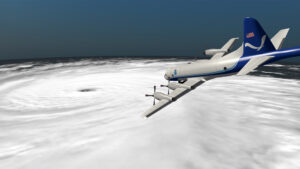
 Our newest exhibit uses a virtual reality mobile classroom to bring you an exciting experience: flying inside Hurricane Maria. Strap on a pair of virtual reality headsets and become immersed in this unique environment.
The Science in 3D program will feature Hurricane Maria on Tuesday and Thursday at 1:00 pm through Labor Day.

 Sea turtles are frequent visitors to the North Carolina coast, with several individuals nesting on beaches from the Outer Banks to our own Ocean Isle Beach. Learn about the life cycle and different species of sea turtles, how volunteers track sea turtle nests, and what we can do to protect sea turtles in this fun, interactive program. The program will include a craft for kids to complete and the reading of a fun children’s story.

What is a Snorkel Bunny? Join the Museum of Coastal Carolina, Tuesday, May 31 at 6:00 pm, when author Dawn Calisto will discuss the inspiration behind her book “The Snorkel Bunnies! Sea Turtle Adventure!” and present a reading of the book.
 This delightful children’s book takes the reader on a fabulous adventure to discover the wonder of the mysterious, cute, cuddly, sweet and thoughtful “Snorkel Bunny.” Calisto uses adorable creatures called “Snorkel Bunnies” to teach children the importance of respecting our waterways. The “Snorkel Bunnies” are used as instruments to clean up trash by the sea, respect habitats and endangered species as well as educating children along with adults about endangered sea turtles and how to protect them. The “Snorkel Bunnies” also encourage the importance of protecting our beaches.
The Sandbar Lecture Series at the Museum of Coastal Carolina brings local experts to speak about topics ranging from our coastal environment to Outer Banks history. For more information on the Sandbar Lecture Series contact Jamie Justice, Education Coordinator.
Strap on a virtual reality (VR) headset and watch hundreds of sea turtles emerge from sand, heading toward the beach in our newest VR program, Sea Turtle Quest. This exciting program explores the life cycle of sea turtle including digging a nest, laying eggs, and returning to the sea. Through VR technology, explore a virtual science laboratory that brings the real world into the lab and teaches the process of science. Examine eggshells with a microscope, scale, and other common lab tools. Match the sea turtle tracks to the sea turtle who laid them by examining photos of turtle tracks. Learn why not all baby sea turtles survive and what you can do to protect hatchlings.
The Science in 3D program will feature Sea Turtle Quest on Monday, Wednesday, and Friday at 1:00 pm through Labor Day. The Science in 3D program is hosted by Education Coordinator Jamie Justice, who will help launch each VR adventure and answer questions about the experience. This program is not recommended for children under 8 or people who experience motion sickness.

 Children can test their ocean IQ and learn who really lives in the ocean while being safe. This program is designed to entertain and educate kids about sea life using a fun, interactive format. Kids will learn all about the sea life they are swimming with and the way the animals protect themselves. Safety while at the beach or near water will also be discussed across seven rules such as what to do when swimming alone, how to help someone in the water, etc. Kids will have an opportunity to make sea bottles (plastic bottles that they can fill with shells, crystal sand, and mermaid magic) that they can take home.
Judy Soboda facilitates the All Hands on Deck program. Judy received her Bachelor’s in Education from Bowling Green State University. She has lived on Ocean Isle Beach for the last 20 years and has been a dependable volunteer maintaining and caring for the fish and sea critters at the Museum of Coastal Carolina.