


Old Baldy Foundation Educato r and Collections Coordinator Jake Grossman will discuss the key roles women historically played in managing continuous lighthouse operations when crises made it impossible for male lighthouse keepers to serve. Lighthouse keeper jobs were some of the first non-clerical government roles available for women in a time when employment options for women were extremely limited. Grossman will highlight noteworthy 18 th and 19 th century women keepers, including Hannah Thomas, Rebecca Long, Catherine Moore, and others who warned ships of danger and guided them safely throughout maritime history.
Grossman graduated from Temple University with an undergraduate degree in history and a master’s degree in public history. He, his colleagues, and Old Baldy Foundation supporters
are committed to preserving and educating about the Old Baldy Lighthouse and the man-made history of Smith Island and the Lower Cape Fear.
 You’re invited to get up close with some of the more familiar creatures found in our ocean.
Our touch tank pool allows you to gently touch marine animals such as sea stars, sea urchins, whelks, horseshoe crabs, and hermit crabs. These animals live in a variety of habitats and have developed many ways to survive the waves and predators. Volunteers are on hand to assist and teach you about these incredible animals.
Did you know, when a sea urchin “hugs” your finger if you gently touch its spines, it’s actually checking you out: Are you food or predator? If you’re neither, the animal will just gradually release you.
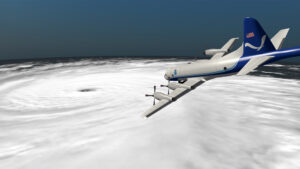

Learn how to prepare your home and family for storms ahead of hurricane season by building an emergency preparedness kit. This lesson is followed by an exciting virtual reality mobile classroom experience: flying inside Hurricane Maria. Strap on a pair of Oculus Quest virtual reality goggles and become immersed in this unique environment.
Our Science in 3D exhibit uses a virtual reality mobile classroom to bring this exciting experience to you! Through VR technology, explore a virtual science laboratory that brings the real world into the lab and teaches the process of science. The Science in 3D program is hosted by Education Manager Jamie Justice, who will help launch each VR adventure and answer questions about the experience. This program is not recommended for children under 8 or people who experience motion sickness.

 Children can test their ocean IQ and learn who really lives in the ocean while being safe. This program is designed to entertain and educate kids about sea life using a fun, interactive format. Kids will learn all about the sea life they are swimming with and the way the animals protect themselves. Safety while at the beach or near water will also be discussed across seven rules such as what to do when swimming alone, how to help someone in the water, etc. Kids will have an opportunity to make sea bottles (plastic bottles that they can fill with shells, crystal sand, and mermaid magic) that they can take home.
Judy Sobota facilitates the All Hands on Deck program. Sobota received her Bachelor’s in Education from Bowling Green State University. She has lived on Ocean Isle Beach for the last 20 years and has been a dependable volunteer maintaining and caring for the fish and sea critters at the Museum of Coastal Carolina.
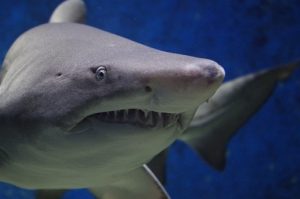
 Take a look at the amazing world of sharks and what makes them unique to other fish. Learn about these powerful predators’ anatomy and bust myths and misconceptions about sharks. Ever wonder if sharks sleep? Are they really people eaters? How many teeth do they have? We’ll delve into these questions and more in this interactive program. Then we’ll discuss some “shark smarts” that will keep you and others safe while you have fun in the sun. Finish with some fun shark art and make a shark craft to take home.
Our Education Manager, Jamie Justice will present this fun, interactive program. Jamie received her Bachelor of Science in Marine Biology from Bowling Green State University and her Master of Science in Environmental Science with concentrations in Marine and Coastal Education and Coastal Management from the University of North Carolina, Wilmington.

S trap on a virtual reality (VR) headset and watch hundreds of sea turtles emerge from sand, heading toward the beach in our newest VR program, Sea Turtle Quest. This exciting program explores the life cycle of sea turtle including digging a nest, laying eggs, and returning to the sea. Through VR technology, explore a virtual science laboratory that brings the real world into the lab and teaches the process of science. Examine eggshells with a microscope, scale, and other common lab tools. Match the sea turtle tracks to the sea turtle who laid them by examining photos of turtle tracks. Learn why not all baby sea turtles survive and what you can do to protect hatchlings.
The Science in 3D program will feature Sea Turtle Quest on Tuesdays and Thursday at 1:00 pm through Labor Day. The Science in 3D program is hosted by Education Managerr Jamie Justice, who will help launch each VR adventure and answer questions about the experience. This program is not recommended for children under 8 or people who experience motion sickness.

 Sea turtles are frequent visitors to the North Carolina coast, with several individuals nesting on beaches from the Outer Banks to our own Ocean Isle Beach. Starting June 1, every Thursday at 3:00 pm, learn about the species of sea turtles found on the Carolina coast, how volunteers track sea turtle nests, and what we can do to protect sea turtles in this fun, interactive program. The Sea Turtle Adventures program includes a craft for kids to take home.
Our Education Manager, Jamie Justice will present this fun, interactive program. Jamie received her Bachelor of Science in Marine Biology from Bowling Green State University and her Master of Science in Environmental Science with concentrations in Marine and Coastal Education and Coastal Management from the University of North Carolina, Wilmington.


Curious about how to tell a venomous from a non-venomous snake? This summer, local reptile expert Matthew Bookout will teach you how to differentiate venomous from non-venomous serpents – useful knowledge to have when you come across one in your back yard. He will also share tips about caring for snakes and talk about which reptiles make the best pets. Bookout will bring several live snakes to his program each week so that you can see them up close and personal.
Matthew Bookout has been fascinated with reptiles for most of his life and acquired his first snake at 13 years old. He says, “I drove my Mom crazy with snakes and frogs running through the house after they crawled out of shoeboxes from under my bed.” With a wealth of knowledge about venomous and non-venomous snake species, Bookout wows visitors with his unique personal collection of snakes. As the local business owner of Ophidian’s Lair, he takes care of and feeds the Museum’s live venomous and non-venomous snakes.
You’re invited to get up close with some of the more familiar creatures found in our ocean.
Our touch tank pool allows you to gently touch marine animals such as sea stars, sea urchins, whelks, horseshoe crabs, and hermit crabs. These animals live in a variety of habitats and have developed many ways to survive the waves and predators. Volunteers are on hand to assist and teach you about these incredible animals.
Did you know, when a sea urchin “hugs” your finger if you gently touch its spines, it’s actually checking you out: Are you food or predator? If you’re neither, the animal will just gradually release you.
You’re invited to get up close with some of the more familiar creatures found in our ocean.
Our touch tank pool allows you to gently touch marine animals such as sea stars, sea urchins, whelks, horseshoe crabs, and hermit crabs. These animals live in a variety of habitats and have developed many ways to survive the waves and predators. Volunteers are on hand to assist and teach you about these incredible animals.
Did you know, when a sea urchin “hugs” your finger if you gently touch its spines, it’s actually checking you out: Are you food or predator? If you’re neither, the animal will just gradually release you.