


 Take a look at the amazing world of sharks and what makes them unique to other fish. Learn about these powerful predators’ anatomy and bust myths and misconceptions about sharks. Ever wonder if sharks sleep? Are they really people eaters? How many teeth do they have? We’ll delve into these questions and more in this interactive program. Then we’ll discuss some “shark smarts” that will keep you and others safe while you have fun in the sun. Finish with some fun shark art and make a shark craft to take home.
Our Education Coordinator, Jamie Justice will present this fun, interactive program. Jamie received her Bachelor of Science in Marine Biology from Bowling Green State University and her Master of Science in Environmental Science with concentrations in Marine and Coastal Education and Coastal Management from the University of North Carolina, Wilmington.
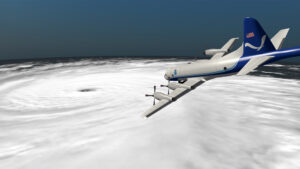
 Our newest exhibit uses a virtual reality mobile classroom to bring you an exciting experience: flying inside Hurricane Maria. Strap on a pair of virtual reality headsets and become immersed in this unique environment.
The Science in 3D program will feature Hurricane Maria on Tuesday and Thursday at 1:00 pm through Labor Day.

 Learn about the diversity of life in the Green Swamp in this CSI program. Solve the mystery of a mysterious animal sighting by uncovering clues about animal tracks, habitat, and more!
Our Education Coordinator, Jamie Justice will present this fun, interactive program. Jamie received her Bachelor of Science in Marine Biology from Bowling Green State University and her Master of Science in Environmental Science with concentrations in Marine and Coastal Education and Coastal Management from the University of North Carolina, Wilmington.
 Do you know how many species of venomous snakes call NC home? Can you tell the difference between a venomous snake and a harmless snake? Matthew Bookout can tell you anything you ever wanted to know about NC’s snakes and other reptiles. He will bring along some of his favorite live animals. His program is sometimes preceded by a live snake feeding. Call the museum for weekly information.
 You’re invited to get up close with some of the more familiar creatures found in our ocean.
Our touch tank pool allows you to gently touch marine animals such as sea stars, sea urchins, whelks, horseshoe crabs, and hermit crabs. These animals live in a variety of habitats and have developed many ways to survive the waves and predators. Volunteers are on hand to assist and teach you about these incredible animals.
Did you know, when a sea urchin “hugs” your finger if you gently touch its spines, it’s actually checking you out: Are you food or predator? If you’re neither, the animal will just gradually release you.

S trap on a virtual reality (VR) headset and watch hundreds of sea turtles emerge from sand, heading toward the beach in our newest VR program, Sea Turtle Quest. This exciting program explores the life cycle of sea turtle including digging a nest, laying eggs, and returning to the sea. Through VR technology, explore a virtual science laboratory that brings the real world into the lab and teaches the process of science. Examine eggshells with a microscope, scale, and other common lab tools. Match the sea turtle tracks to the sea turtle who laid them by examining photos of turtle tracks. Learn why not all baby sea turtles survive and what you can do to protect hatchlings.
The Science in 3D program will feature Sea Turtle Quest on Monday, Wednesday, and Friday at 1:00 pm through Labor Day. The Science in 3D program is hosted by Education Coordinator Jamie Justice, who will help launch each VR adventure and answer questions about the experience. This program is not recommended for children under 8 or people who experience motion sickness.
Strap on a virtual reality (VR) headset and watch hundreds of sea turtles emerge from sand, heading toward the beach in our newest VR program, Sea Turtle Quest. This exciting program explores the life cycle of sea turtle including digging a nest, laying eggs, and returning to the sea. Through VR technology, explore a virtual science laboratory that brings the real world into the lab and teaches the process of science. Examine eggshells with a microscope, scale, and other common lab tools. Match the sea turtle tracks to the sea turtle who laid them by examining photos of turtle tracks. Learn why not all baby sea turtles survive and what you can do to protect hatchlings.
The Science in 3D program will feature Sea Turtle Quest on Monday, Wednesday, and Friday at 1:00 pm through Labor Day. The Science in 3D program is hosted by Education Coordinator Jamie Justice, who will help launch each VR adventure and answer questions about the experience. This program is not recommended for children under 8 or people who experience motion sickness.
 This program concerns North Carolina ocean animal rescue efforts including the Sea Biscuit Wildlife Shelter and the Karen Beasley Sea Turtle Rescue and Rehabilitation Center. The program will also include a discussion of the largest marine mammal hospital in the world in California that has rescued over 25,000 sea lions and seals. All of these rescue efforts have a similar purpose: rescue, rehabilitation, and release. The program will detail why an animal needs to be rescued, how it is rescued, and what determines if and when the animal is released. The program will have a brief discussion of how the health of ocean animals is connected to the health of the ocean. The program will include an art activity for children.
Step into the shoes of working scientists in this family friendly program. Each week, we will feature a different type of scientist, describe the research they conduct, and dive into their world with hands-on activities.
Dates:
Sep 8 Become a marine biologist by studying the life cycles of sharks, dolphins, and whales.
Sep 15 What’s the weather today? Learn how weather works and storms form by becoming a meteorologist.
Sep 22 We’ll use microscopes to identify waterborne organisms as we try our hand at being microbiologists.
Sep 29 Take a closer look at how an ecosystem works. Local ecologists study the marsh ecosystems, such as the Green Swamp.
Oct 6 Astronomer – Study what’s up in the night sky and talk about the influence of light pollution on the night sky.
Oct 13 Aquaculturist – Also known as fish farmers, aquaculturists raise fish and shellfish under controlled conditions.
Oct 20 Paleontologist – Dig deep into the world of dinosaurs! We will unearth field techniques and make a few discoveries of our own.
Oct 27 Herpetologist – Turtles, frogs, and snakes, oh my! Hop on over this week to learn about local reptiles and amphibians.
Nov 3 Wildlife Biologist – Use tracks, trail cameras, and other findings to solve a mystery in the Green Swamp.
Nov 10 Chemist – Put on your safety glasses and make a density potion to learn about different types of chemical reactions.
Nov 17 Oceanographer – Learn about the four sections of oceanography with a fun interactive activity from each section.
Dec 1 Zoologist – Animals come in all shapes and sizes. Learn all about the different types of animals and all that goes into properly maintaining them in captivity as we talk about zoologists.
Dec 8 Botanist – Dive into the world of plants and learn what it is like to be a botanist! We will focus on plants for pollinators and explore pollination through hands-on activities.
Dec 15 Ornithologist – This week is all about birds! Learn how scientists identify and track birds through fun, interactive activities as we take flight as ornithologists.
Dec 22 Naturalist – Take a walk out in nature and become a naturalist. Piece together animal evidence commonly found near trails to solve a mystery in this fun, educational program.
Dec 29 Geologist – Rocks rock! Explore the different types of rock as we dig for treasures in this fun, interactive program experiencing the world of geologists.
Jamie Justice is the creator of Spotlight Science. Justice is the Education Manager for the Museum of Coastal Carolina and Ingram Planetarium. She received her Bachelor of Science in Marine Biology from Bowling Green State University and her Master of Science in Environmental Science with concentrations in Marine and Coastal Education and Coastal Management from the University of North Carolina, Wilmington.
You’re invited to get up close with some of the more familiar creatures found in our ocean.
Our touch tank pool allows you to gently touch marine animals such as sea stars, sea urchins, whelks, horseshoe crabs, and hermit crabs. These animals live in a variety of habitats and have developed many ways to survive the waves and predators. Volunteers are on hand to assist and teach you about these incredible animals.
Did you know, when a sea urchin “hugs” your finger if you gently touch its spines, it’s actually checking you out: Are you food or predator? If you’re neither, the animal will just gradually release you.